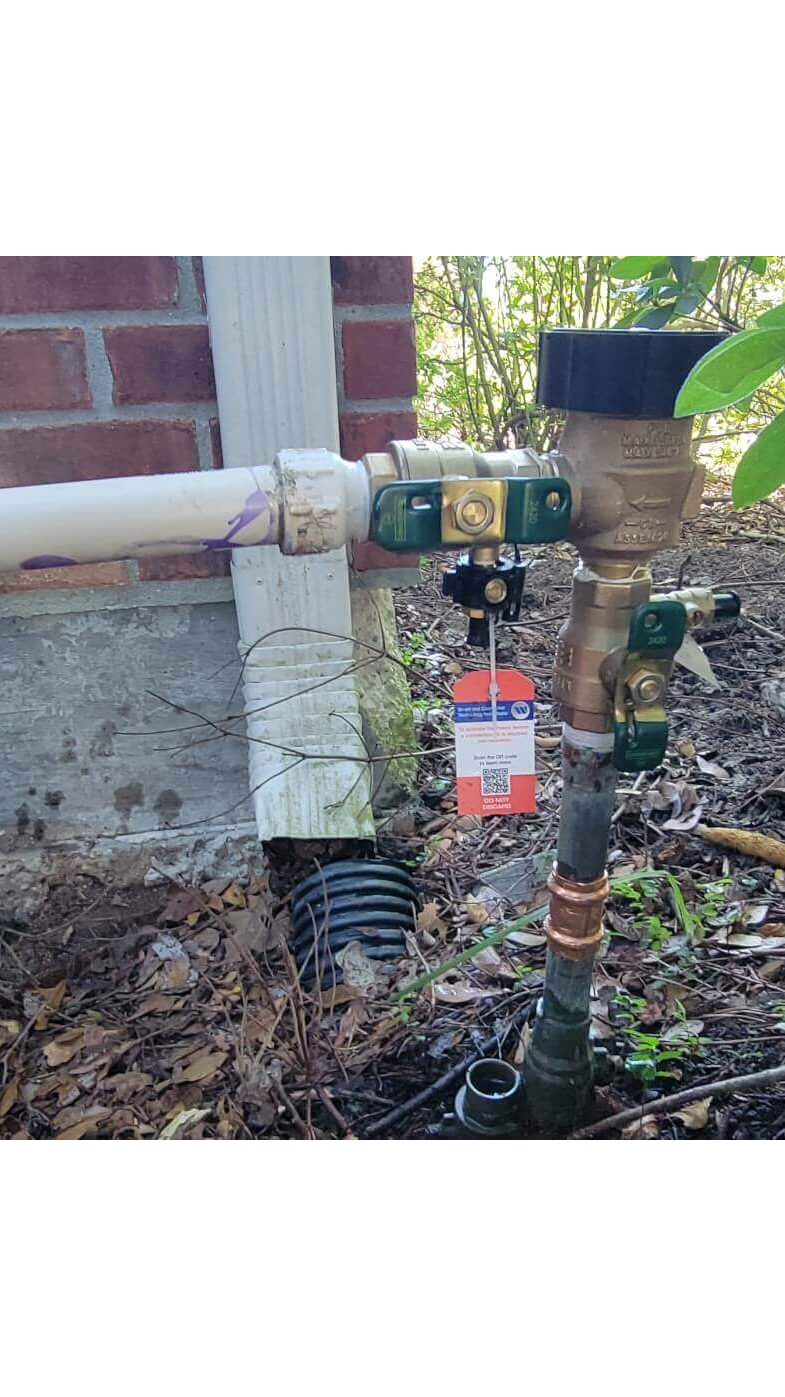
Key Takeaways
- SWBNO fines for backflow non-compliance start at $500 per violation, while professional testing typically costs under $225, making compliance significantly more affordable than penalties
- Only Louisiana-licensed backflow testers with SWBNO approval can legally perform certifications in New Orleans—unauthorized testing won’t satisfy regulatory requirements
- Annual testing reports are due within 10 days of testing, and missing the certification deadline triggers automatic non-compliance notifications and initial fines, followed by a compliance order requiring testing within 15 days, with escalating penalties up to $2,000-$3,000 and potential water service shutoff for continued violations
- High-risk commercial properties face additional compliance burdens including quarterly testing requirements and specialized documentation for irrigation and industrial systems
- Certified testers handle complete documentation and portal submission, preventing costly rejections that occur when property owners attempt self-compliance
Property owners in New Orleans face a critical decision each year: invest in professional backflow testing or risk substantial fines from the Sewerage and Water Board of New Orleans (SWBNO). The mathematics are straightforward—compliance costs significantly less than penalties, yet thousands of property owners still find themselves scrambling to avoid escalating fines and water service interruptions.
SWBNO Fines Start at $500 While Basic Testing Can Be Under $225
The cost comparison between compliance and non-compliance reveals why professional testing represents smart financial planning. SWBNO imposes automatic $500 fines for first-time violations, with repeat offenses escalating to $2,000 to $3,000 per device. These penalties apply to each individual backflow prevention assembly, meaning properties with multiple devices face multiplied exposure. Meanwhile, standard residential backflow testing ranges from $75-150 per device, while commercial testing averages $125-225 depending on complexity and accessibility.
The financial impact extends beyond initial fines. Non-compliant properties risk mandatory water service interruptions, creating operational shutdowns that cost businesses thousands in lost revenue. Emergency compliance testing carries premium pricing and additional fees when property owners attempt last-minute corrections. National Economy Plumbers specializes in proactive backflow compliance, helping property owners avoid these costly emergency scenarios through scheduled annual testing programs.
Volume discounts further reduce per-unit costs for properties with multiple devices, with commercial properties able to achieve savings through testing contracts that bundle multiple assemblies. These savings compound annually, making professional compliance programs increasingly cost-effective compared to penalty exposure over time.
Only Louisiana-Licensed SWBNO-Approved Testers Count
Property owners attempting to save money through unauthorized testing face a harsh reality—SWBNO only accepts results from certified Backflow Prevention Assembly Testers (BPATs) who hold both Louisiana state licensing and SWBNO approval. This dual credential requirement eliminates shortcuts and ensures testing integrity across all New Orleans properties.
Louisiana State Plumbing Board Licensing Requirements
The Louisiana State Plumbing Board, in conjunction with certification by the American Society of Sanitary Engineering (ASSE), oversees initial licensing requirements for backflow testers, establishing minimum competency standards through specialized training and passing examinations. Licensed testers must demonstrate proficiency with calibrated differential-pressure gauges and understand the technical specifications of various backflow prevention assemblies. The state maintains a searchable database of licensed professionals, though not all hold the additional SWBNO approval required for New Orleans compliance.
Licensed testers must undergo recertification and maintain calibrated testing equipment, with annual calibration of gauges required. Testing procedures often follow USC Foundation methodologies. This equipment requirement represents a significant investment, explaining why legitimate testing services charge appropriate fees to maintain proper instrumentation and certification compliance.
SWBNO Approval Beyond State Licensing
SWBNO approval requires additional qualifications beyond basic state licensing, including familiarity with local regulations and the AquaResource Customer Portal submission process. Approved testers understand New Orleans-specific requirements such as documentation formatting standards and the 10-day submission window. Many state-licensed testers lack SWBNO approval, creating confusion for property owners who assume any licensed plumber can perform acceptable testing.
The dual approval system protects property owners from invalid test results that appear legitimate but fail regulatory acceptance. SWBNO maintains its approved tester list to ensure consistent quality and proper submission protocols across all compliance testing performed within the city.
Annual Testing Deadlines Trigger Automatic Penalties
SWBNO operates an automated compliance monitoring system that tracks testing deadlines and generates violation notices without human intervention. This systematic approach eliminates discretionary enforcement, meaning missed deadlines immediately trigger penalty assessments regardless of circumstances or intentions.
Mandatory Testing Applies to All Properties Requiring Backflow Prevention
Every installed backflow prevention assembly requires annual certification testing without exceptions. Properties with irrigation systems, fire sprinklers, pools, or any potential cross-connections must maintain current certifications regardless of seasonal usage patterns. Commercial properties face universal testing requirements due to their elevated contamination risk profiles. Multi-tenant buildings need protection at both service entrances and individual unit connections when tenants engage in high-risk activities. Building owners bear ultimate responsibility for tenant compliance, making testing programs vital for property management companies.
10-Day AquaResource Portal Submission Window
Test results must reach SWBNO through the AquaResource Customer Portal within 10 calendar days of testing completion. This narrow submission window creates compliance risks when repairs are needed or when property owners attempt self-managed submissions. The portal requires specific formatting and complete device information, with automatic rejection for incomplete or improperly formatted submissions.
Professional testers typically submit results within 24-48 hours of testing completion, providing comfortable margins against deadline violations. They maintain digital confirmation records that prove timely submission if questions arise during compliance audits. Property owners attempting self-submission often discover formatting requirements only after missing submission deadlines.
Escalating Fine Structure and Water Shutoff Risk
SWBNO’s penalty structure escalates rapidly from initial $500 violations to maximum $2,000 to $3,000 fines for repeated non-compliance. Extended violations and continued non-compliance can trigger compliance orders that mandate immediate testing or face water service interruption. These service shutoffs remain in effect until proper certification documentation reaches SWBNO through approved channels.
Water service restoration requires additional fees beyond testing costs, creating cumulative expenses that far exceed proactive compliance investments. Business interruption from service shutoffs typically costs thousands in lost revenue, employee downtime, and customer disruption. Emergency restoration services command premium pricing when properties face immediate operational needs.
High-Risk Commercial Properties Face Additional Compliance Burden
Commercial properties classified as high-risk face enhanced compliance requirements that exceed standard annual testing protocols. These facilities require more sophisticated backflow prevention systems with redundant protection layers and accelerated testing schedules that can reach quarterly frequencies.
Irrigation Systems and Pool Equipment Requirements
Commercial irrigation systems require specialized backflow prevention due to potential for chemical use and underground cross-connection risks. Pool equipment can create cross-connection points, requiring backflow prevention. Golf courses and large landscaping operations face complex compliance scenarios with multiple irrigation zones requiring individual protection assemblies. These properties often need dozens of backflow preventers, creating substantial annual testing expenses that require careful budgeting and coordination to avoid missed deadlines across multiple devices.
Industrial and Chemical Process Facilities
Manufacturing facilities handling chemicals, petroleum products, or hazardous materials operate under the highest risk classifications with quarterly testing requirements. Laboratory facilities and hospitals face similar enhanced requirements due to potential biological and chemical contamination risks.
Food processing facilities and commercial kitchens require specialized attention to cross-connections in cleaning systems and chemical sanitizing processes, with additional requirements for specialized backflow preventers on specific equipment.
Common Device Failures Cost More Than Prevention
Backflow prevention assemblies experience predictable failure patterns that create cascading costs when not addressed proactively. Understanding common failure modes helps property owners recognize the financial wisdom of preventive maintenance versus reactive repairs.
Worn Seals and Spring Tension Issues
Rubber seals and gaskets represent the most frequent failure points in backflow assemblies, deteriorating from mineral buildup and normal wear cycles. Spring mechanisms that actuate check valves lose tension over time, preventing proper closure during backflow conditions.
Freeze damage creates sudden failures in external installations, particularly following unusual cold snaps in New Orleans. Expansion forces crack housings and damage internal components, often requiring complete assembly replacement rather than component repairs. Properties with exposed installations should consider insulation or relocation to prevent weather-related failures.
Repair Costs Versus Replacement Decisions
Minor repairs like gasket replacement typically cost $50-$400, with retesting fees often separate and ranging from $45-$125. Internal repairs involving check valve springs and sealing surfaces can range from $75-$250 per component, with overall repair costs varying based on complexity and labor. Complete replacement becomes economical when repair costs exceed 50-60% of new device pricing or when assemblies have recurring failure histories.
Replacement decisions should consider device age, parts availability, and criticality to operations. Assemblies over ten years old with major component failures often warrant complete replacement to ensure long-term reliability. High-risk facilities frequently choose replacement at first major failure to minimize future compliance risks.
Emergency Retesting After Repairs
All repairs require immediate retesting using complete certification protocols, not abbreviated verification procedures. Emergency retesting commands premium pricing when properties face compliance deadlines or water service interruptions. The retesting process must verify successful repair completion while confirming no new issues were introduced during repair work.
Retesting costs are typically separate from repair costs and may be lower than original certification fees, though they still add to the overall expense. All retest results must be submitted through proper channels within standard timeframes.
Certified Testers Handle Documentation and Portal Submission
Professional backflow testers provide documentation services that extend far beyond physical testing procedures. Their expertise in regulatory requirements and submission protocols prevents costly rejections that plague property owners attempting self-managed compliance.
AquaResource Customer Portal Requirements
The SWBNO AquaResource portal requires specific formatting standards and complete device information that must match regulatory database records exactly. Portal submissions need proper license verification, calibrated test results, and appropriate digital signatures. The system automatically rejects submissions with missing fields, invalid license numbers, or improperly formatted readings.
Professional testers maintain portal access credentials and understand submission procedures that confuse first-time users. They generate confirmation numbers that serve as compliance proof and maintain digital backup records satisfying five-year retention requirements. Portal navigation requires familiarity with device classification codes and hazard level designations specific to New Orleans regulations.
Proper Test Report Formatting Prevents Rejections
Test reports must include property information, complete device specifications with serial numbers and locations, detailed pressure readings, and proper tester credentials. Report formatting follows strict SWBNO guidelines with no deviations permitted for custom modifications or abbreviated submissions. Missing information triggers automatic rejections that restart compliance timelines.
Professional documentation includes detailed condition assessments that support repair or replacement recommendations, along with pressure readings and valve function verification. These reports satisfy insurance requirements and provide valuable records for property sale transactions.
Professional Testing Prevents Costly Non-Compliance Scenarios
Working with certified backflow testers creates predictable compliance outcomes that eliminate surprise penalties and service interruptions. Professional services provide protection against the multiple failure points that create non-compliance risks for property owners attempting self-managed testing programs.
Professional testers understand local enforcement patterns and can provide strategic scheduling that avoids peak demand periods when emergency services command premium pricing. They maintain relationships with parts suppliers and repair specialists, enabling efficient resolution when devices require maintenance or replacement.
The investment in professional testing services pays dividends through avoided penalties, prevented service interruptions, and documentation that satisfies insurance and legal requirements. Property owners who treat backflow compliance as routine maintenance rather than optional expense achieve better long-term outcomes with lower total costs.
For backflow testing services that ensure SWBNO compliance while protecting your property investment, contact National Economy Plumbers for expert backflow prevention solutions in New Orleans.
National Economy Plumbers
7204 Washington Ave
New Orleans
LA
70125
United States


