Forthcoming book on Frederick Douglass and America at 250 deepens nationally acclaimed journalist and author’s inquiry into human dignity and economic justice
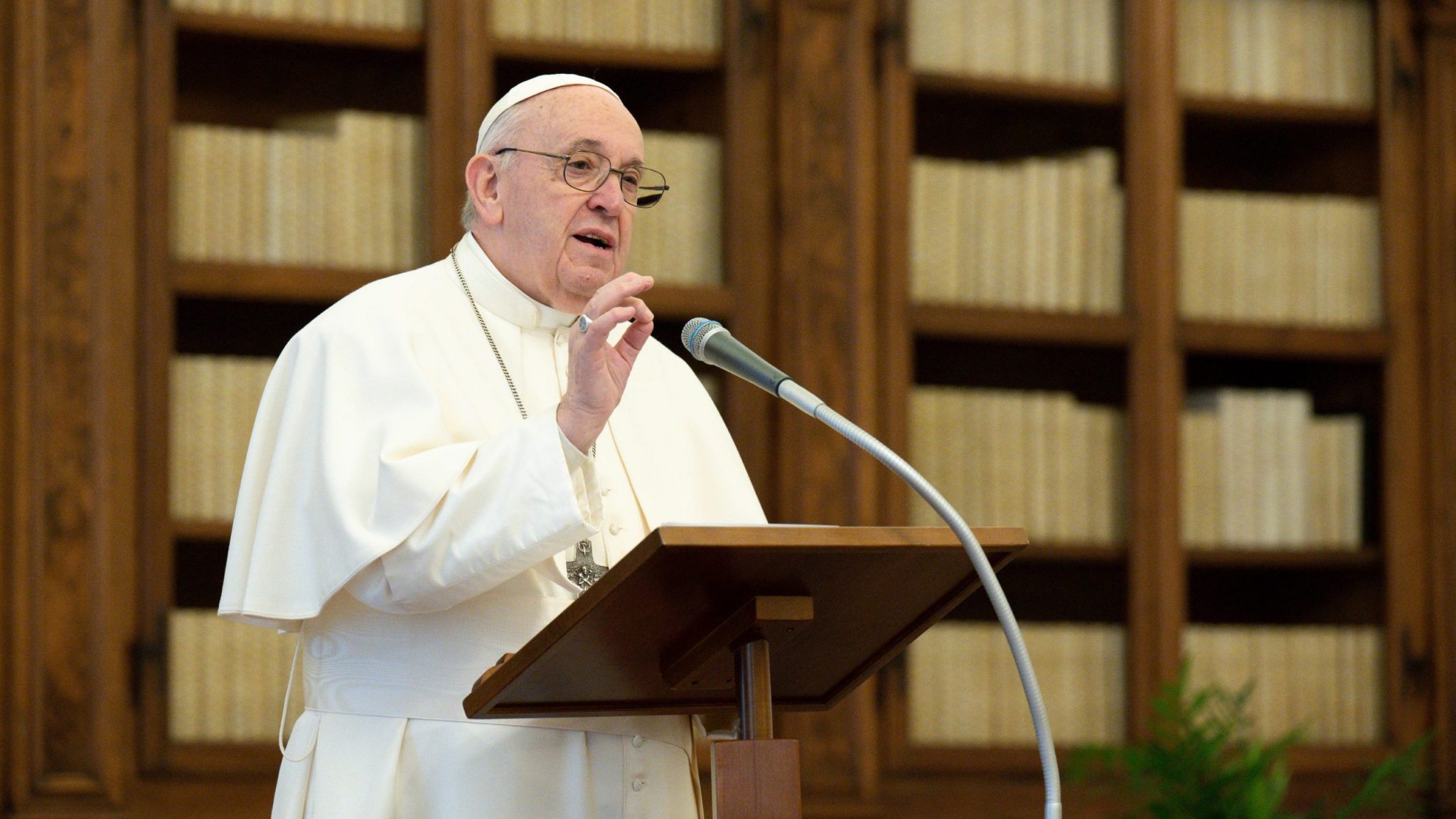
DETROIT, MI, UNITED STATES, September 6, 2026 /EINPresswire.com/ — On this Labor Day weekend, nationally acclaimed journalist, author and public intellectual Bankole Thompson is paying tribute to the late Pope Francis by returning to one of the defining convictions of his papacy: that an economy must ultimately be judged not simply by what it produces, but by how it treats human beings especially workers, the poor and those pushed to the margins.
For Thompson, who has spent nearly 25 years writing about democracy, poverty, economic justice and the moral obligations of leadership, Francis represented something increasingly rare in public life and that is a moral voice willing to confront power on behalf of people who possessed very little of it.
“Pope Francis refused to allow the world to separate economics from human dignity,” Thompson said. “He understood that behind every argument about wages, markets, poverty and work stands a human being. On Labor Day, that is a message America desperately needs to hear again.”
Thompson has long admired Francis for a papacy that consistently elevated the poor, challenged indifference and insisted that economic arrangements must never diminish the inherent dignity of the human person.
For Thompson, that witness carries particular meaning on Labor Day.
“We cannot celebrate the worker while remaining indifferent to the conditions of the worker,” Thompson said. “We cannot praise labor while accepting an economy in which people work hard and still struggle for housing, health care, food, security and a meaningful future for their children.”
An American Examination of Conscience
The reflection comes as Thompson prepares his forthcoming seventh book, “Bankole Thompson’s 12 Moral Questions: Frederick Douglass and the Soul of America at 250,” early next year. A limited edition will be released in November.
Thompson is deliberately keeping the book’s individual questions, chapter structure and many of its intellectual encounters private ahead of publication.
But he said the work grows from a concern that has animated much of his journalism, books and public life: whether the institutions of American democracy and economic life are living up to the moral promises the nation makes about itself.
“Frederick Douglass understood that a nation cannot be judged only by the grandeur of its declarations,” Thompson said. “It must be judged by the lives people are actually permitted to live. That is why America at 250 should be more than a celebration. It should be an examination of conscience.”
Rather than approaching the nation’s 250th anniversary simply as an occasion for historical commemoration, Thompson’s forthcoming work asks readers to consider what the American experiment now demands of the generations who have inherited it.
“The question is not simply whether America can create wealth. America has demonstrated that it can,” Thompson said. “The harder question is whether prosperity can coexist with human dignity—and whether those whose labor creates prosperity are allowed to share meaningfully in its promise.”
From Francis’ Witness to Anderson’s Life
For Thompson, the moral challenge embodied by Francis also resonates with another life he was recently called upon to publicly interpret: that of legendary civil rights leader and physician Dr. William G. Anderson.
On August 25, Thompson, at 47, delivered the eulogy for Anderson, who was 98—a striking generational encounter between a contemporary journalist examining the American conscience and one of the towering witnesses of the modern Civil Rights Movement.
Anderson was the leader of the historic Albany Movement in Georgia and worked alongside Rev. Dr. Martin Luther King Jr. and other major figures in the struggle against segregation. His life spanned nearly a century of the American experiment and embodied the proposition that citizenship carries obligations beyond personal advancement.
For Thompson, being asked at 47 to eulogize a 98-year-old civil rights giant was more than a ceremonial responsibility.
It represented the transmission of moral memory from one generation to another.
“Dr. Anderson belonged to a generation that understood that human dignity sometimes requires confronting institutions far more powerful than yourself,” Thompson said. “Francis spoke from a different tradition and a different place in the world, but his insistence on standing with those at the margins reflected the same fundamental truth: human dignity cannot depend upon proximity to power.”
Thompson said the lesson is especially important as America marks 250 years.
“The question is not simply whether we will celebrate people like Dr. Anderson,” Thompson said. “It is whether we are prepared to inherit the moral obligations for which his generation sacrificed.”
The “Surgeon of Freedom”
Thompson’s Labor Day reflection on Francis is not a new invocation of the late pontiff.
As a twice-weekly opinion columnist at The Detroit News, Thompson responded to Francis’s death with a deeply personal and consequential column examining the moral meaning of his papacy.
In that column, Thompson described Francis as a “surgeon of freedom” a characterization that captured what he regarded as the pontiff’s willingness to enter the wounds of a fractured world and challenge institutions of power to recognize the humanity of those too easily forgotten.
For Thompson, the phrase was not simply a tribute to a religious leader. It expressed his understanding of the kind of moral leadership increasingly absent from public life.
“A surgeon does not pretend the wound isn’t there,” Thompson said. “Francis was willing to probe the wounds of poverty, inequality, migration, war and human abandonment. He made powerful institutions uncomfortable because he kept directing their attention toward people the world found convenient not to see.”
Thompson said that is one reason Francis’s voice remains relevant beyond the Catholic Church.
“Francis belonged to the world because the questions he raised belonged to humanity,” Thompson said. “What do we owe the poor? What does power owe the powerless? What is an economy for? What happens to our humanity when another person’s suffering becomes acceptable to us? Those are not Catholic questions alone. They are questions of conscience.”
“Pilgrims of Hope in an Age of Fear”
That engagement with Francis and the moral vocabulary of faith took on another dimension on June 24, when Thompson addressed an audience at St. Paul of the Cross Passionist Retreat Center in Detroit in a presentation titled “Pilgrims of Hope in an Age of Fear.”
It marked Thompson’s first address before a Catholic audience. There, he explored hope not as sentimentality or passive optimism, but as a moral obligation in periods of fear, division and uncertainty, themes that also animate his sixth book, “HOPE: On The Mountain Of Fear.”
“I am not a Catholic theologian,” Thompson said. “I write as a journalist and as someone who has spent much of his professional life interrogating power, poverty and democracy. But I admired Pope Francis because he understood something fundamental and that is moral authority means very little if it never travels to the margins.”
The trajectory from Thompson’s Detroit News reflection on Francis to his address at a Passionist retreat center underscores a broader dimension of his recent work and that is an increasing examination of how questions of faith, conscience and human dignity intersect with democracy and economic justice.
“Francis reminded us that progress without human dignity is an impoverished definition of progress,” Thompson said. “America at 250 should ask itself a similarly difficult question: What is prosperity worth if the people whose labor sustains it cannot experience its promise?”
“A Continuum of Moral Inquiry”
Thompson’s forthcoming book extends a body of work that has drawn engagement from leading figures across civil rights, religion, law and American public life.
His 2023 book, “Fiery Conscience,” was endorsed by legendary civil rights leader Rev. Jesse Jackson Sr. and Rev. Leonard Hamlin Sr. of the Washington National Cathedral, among other prominent voices. The book was reviewed by Forbes and is listed in the Schomburg Center for Research in Black Culture.
Thompson’s sixth book, “HOPE: On The Mountain Of Fear,” features a foreword by Sister Simone Campbell, the Presidential Medal of Freedom recipient and nationally recognized Catholic advocate for social and economic justice, and an epilogue by Marc Morial, President and CEO of the National Urban League.
That continuum now extends to Thompson’s examination of America at 250.
Gerald E. Rosen, retired Chief Judge of the U.S. District Court for the Eastern District of Michigan and chief judicial mediator of Detroit’s historic municipal bankruptcy, has endorsed Thompson’s forthcoming seventh book, calling it a “must read for serious students of America and our society’s promise to the world.”
The range of voices surrounding Thompson’s books reflects the terrain his writing has increasingly occupied: the intersection of journalism, democracy, faith, economic justice and the American conscience.
His recent eulogy of Anderson adds another dimension to that work: the responsibility of interpreting for a new generation the lives of those who helped force the nation closer to its democratic promises.
The Worker as a Moral Measure
As founder and chairman of The PuLSE Institute, a national anti-poverty think tank, Thompson has spent years convening corporate executives, policymakers, civil rights leaders and other decision-makers around poverty, economic inequality and the responsibilities of leadership.
He said Labor Day should force institutions of power to consider workers not simply as economic participants, but as human beings whose lives provide a moral measure of the economy itself.
“The worker cannot simply become a unit of production. The poor cannot become a statistic. And human beings cannot become collateral damage in somebody else’s definition of progress,” Thompson said.
“Pope Francis understood that. Dr. Anderson lived that. And on this Labor Day weekend, their witness should still disturb our conscience.”
For Thompson, that challenge extends beyond one religious tradition, one political ideology or one moment in American history.
It goes to the heart of the question confronting the nation at 250.
“America should honor its workers today,” Thompson said. “But honoring them must mean more than thanking them. It must mean asking whether the economy they sustain is worthy of their labor and whether the nation they are helping to build is worthy of their dignity.”
BANKOLE THOMPSON
The PuLSE Institute
+1 3138000143
email us here
Legal Disclaimer:
EIN Presswire provides this news content “as is” without warranty of any kind. We do not accept any responsibility or liability
for the accuracy, content, images, videos, licenses, completeness, legality, or reliability of the information contained in this
article. If you have any complaints or copyright issues related to this article, kindly contact the author above.

Media gallery