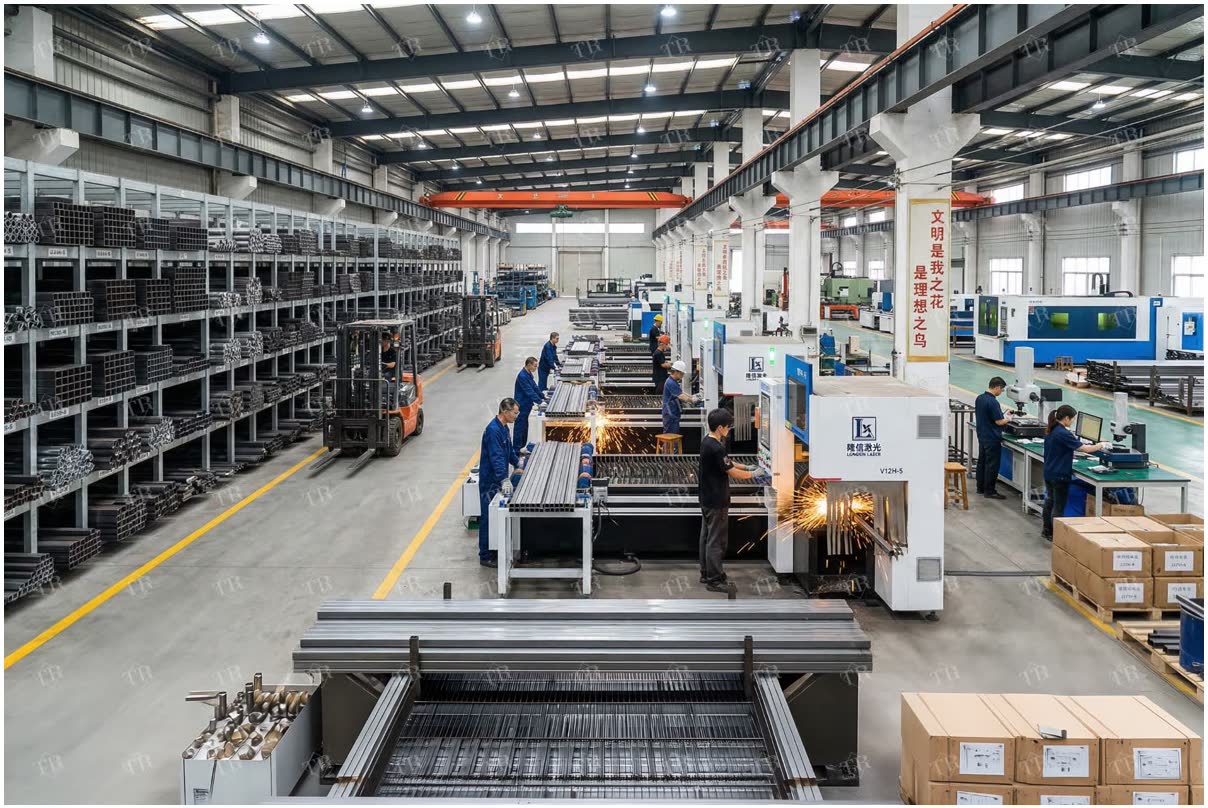
FOSHAN, GUANGDONG, CHINA, October 26, 2026 /EINPresswire.com/ — When procuring commercial salon equipment in volume, deciding between a direct salon furniture manufacturer and an intermediary trading company defines your specification governance, cost transparency, and supply-chain accountability. For international distributors and bulk buyers, the optimal model depends on whether a project requires rigorous manufacturing oversight or multi-vendor consolidation across non-furniture sundries. Operating a 30,000-square-meter facility in Foshan, TURRI exemplifies the direct-manufacturer pathway. It delivers model development, direct quality control, and dedicated export services.
Salon Furniture Manufacturer vs Trading Company: Which Supplier Model Fits the Order?
In commercial salon sourcing, a direct manufacturer is defined as an industrial enterprise that owns machinery, employs specialized labor, and directly controls raw materials, schedules, and quality standards. In contrast, an export trading company operates as a commercial intermediary that aggregates goods from third-party workshops. Rather than assuming one model is universally superior, buyers evaluate how each organizational structure impacts specification governance, production visibility, and warranty accountability.
A direct manufacturer is typically the optimal partner when a procurement program requires proprietary product development. It provides strict dimensional compliance, direct assembly oversight, coordinated multi-stage quality control, and scalable reorders. Conversely, an independent trading company can provide utility when an importer prioritizes multi-factory consolidation across disparate product categories. Trading intermediaries aggregate sundries from dozens of separate workshops.
Evaluating suppliers solely by their commercial license is insufficient. Sourcing directors must analyze what each entity physically controls: the factory floor machinery, raw material procurement streams, production scheduling, and pre-shipment quality audit processes. For multi-category commercial salon programs, the central inquiry is whether the supplier provides direct engineering control. Direct control prevents costly miscommunications and unexpected material substitutions.
Pricing Transparency: Direct factories offer itemized bill-of-materials costing, whereas trading intermediaries typically incorporate a 15% to 25% gross markup to cover operational overhead.
Production Traceability: Manufacturers provide direct factory-floor visibility across laser cutting, welding, and upholstery lines, whereas trading companies rely on fragmented second-hand updates.
Engineering Change Agility: Direct factories modify fabrication jigs and cutting programs within hours, whereas intermediaries require multi-tiered commercial communications that delay critical production adjustments.
After-Sales Accountability: Direct manufacturers maintain standing inventories of spare actuators, hydraulic pumps, and replacement upholstery, guaranteeing rapid warranty fulfillment without third-party finger-pointing.
Compare Production Visibility and Specification Control
Direct production visibility constitutes the most critical structural distinction between manufacturers and trading intermediaries. TURRI operates an advanced manufacturing facility managing an integrated production sequence. This workflow progresses from raw material inspection and laser cutting to frame fabrication, upholstery assembly, electrical actuator testing, and specialized export packaging. Factory-floor transparency ensures complete traceability across every production lot.
Partnering directly with a manufacturing facility establishes an uncompromised conduit between buyer specifications and the production line. When precise chassis dimensions, foam resilience ratings, custom powder-coat finishes, or electrical parameters must be enforced, factory-direct oversight prevents unauthorized material substitutions. Direct engineering contact ensures complete specification fidelity across volume runs.
Compare Customization, Quality Control, and Change Management
Evaluating customization capability requires identifying who executes engineering modifications and who directly controls the assembly line. TURRI provides comprehensive customization across upholstery vinyls, frame dimensions, surface textures, motorized adjustments, bespoke storage configurations, private-label branding, and export packaging systems. Direct factory engineering teams convert design briefs into production tooling without intermediate delays.
Quality assurance must be enforced against documented technical drawings rather than generic commercial promises. TURRI’s specialized testing protocols for motorized salon furniture verify smooth electrical adjustment, mechanical frame stability under dynamic load, and quiet actuator travel before packaging. Technicians check electrical grounding, current draw, and duty cycle limits under simulated operational stress. Final pre-shipment inspections systematically assess cosmetic surfaces, structural joints, functional mechanisms, and carton protection.
During pre-production sampling, direct manufacturers refine physical prototypes in-house. Plant engineers adjust CNC tube bending programs, re-tension upholstery patterns, and verify dynamic actuator clearances on the factory floor. Direct prototyping eliminates communication friction, ensuring pre-production sign-offs translate accurately into volume production tooling.
Compare Product Aggregation, Communication, and Service Coverage
Product aggregation favors a trading company when an importer seeks to consolidate low volumes of unrelated sundries. This includes pairing salon furniture with disposable beauty supplies, chemical cosmetics, and salon apparel into a single shipment. However, when procurement centers on commercial salon furniture, an advanced manufacturer provides unified aggregation within its own manufacturing perimeter. Sourcing from a single factory guarantees consistent upholstery dye lots and matching metal accents.
Communication efficiency directly affects procurement velocity. Direct manufacturer relationships ensure that technical and production inquiries are addressed immediately by engineers authorized to execute decisions. Service commitments should be evaluated against documented deliverables: specialized export packaging, container packing plans, bilingual installation manuals, spare-parts kits, and technical support must be contracted to protect the procurement program. Reliable manufacturers maintain standing inventories of critical replacement components.
Manufacturer vs Trading Company FAQs
These operational answers help bulk buyers objectively compare production control, sourcing aggregation, customization, quality assurance, and long-term service commitments.
Is a Manufacturer Always Better Than a Trading Company?
No single supplier model fits every procurement scenario. Direct manufacturing provides peak value for core furniture lines requiring tight specification control, custom engineering, and volume cost efficiency. A trading company can be practical for aggregating fragmented, low-volume accessories across multiple unrelated factories. Buyers must match supplier capabilities to project requirements.
Which Model Is Better for Custom Salon Furniture?
A direct manufacturer is significantly more effective for custom salon furniture programs. Engineering drawings, material specifications, fabrication jigs, electrical testing, and quality control are managed directly by factory floor personnel. Direct oversight ensures exact execution of custom design parameters.
Which Model Can Simplify Multi-Source Purchasing?
A professional trading company can simplify administration when an importer intentionally sources diverse, non-furniture items from numerous separate factories. The intermediary coordinates and consolidates goods into a single container, handling disparate supplier communications.
What Should Bulk Buyers Compare Besides the Supplier Label?
Procurement teams must evaluate production visibility, engineering capabilities, quality testing methodologies, change-management protocols, pricing transparency, export packaging standards, and formal after-sales support structures. These criteria reveal genuine supplier competency.
How Does TURRI Fit the Direct-Manufacturer Route?
TURRI unites an advanced production facility with full-category salon furniture manufacturing, OEM/ODM engineering, comprehensive pre-shipment quality testing, customized export packaging, and long-term technical service within an integrated manufacturer partnership. This direct operational model guarantees complete specification transparency and direct factory accountability for commercial distributors.
Match the Supplier Model to a Bulk Order with TURRI
Commercial distributors and bulk buyers should align their supplier selection with core priorities regarding engineering control, customization depth, product consolidation, and accountability. For commercial salon programs requiring direct factory governance and coordinated multi-category production, submit your project specifications, volume requirements, and destination details. Connect through https://turrisalon.com/ to start a focused direct-manufacturing review.
TURRI
TURRI
Legal Disclaimer:
EIN Presswire provides this news content “as is” without warranty of any kind. We do not accept any responsibility or liability
for the accuracy, content, images, videos, licenses, completeness, legality, or reliability of the information contained in this
article. If you have any complaints or copyright issues related to this article, kindly contact the author above.

Media gallery