
Key Takeaways
- A typical oilfield frac-sand shift can run 12 to 14 hours, shaped by pre-trip inspections, multiple loads, wellsite waits, and federal hours-of-service limits
- The day usually starts before sunrise with a full truck and trailer inspection, long before the first load gets picked up
- Federal driving-time rules, including the 11-hour driving limit and 14-hour on-duty window, directly control how many loads fit into one shift
- Highways connecting hubs often give way to rough, unpaved lease roads near the well pad, demanding extra care and slower speeds
- Sisu Energy points to transparent pay structures and live dispatch as ways Owner-Operators can better manage the unpredictability of wellsite waits
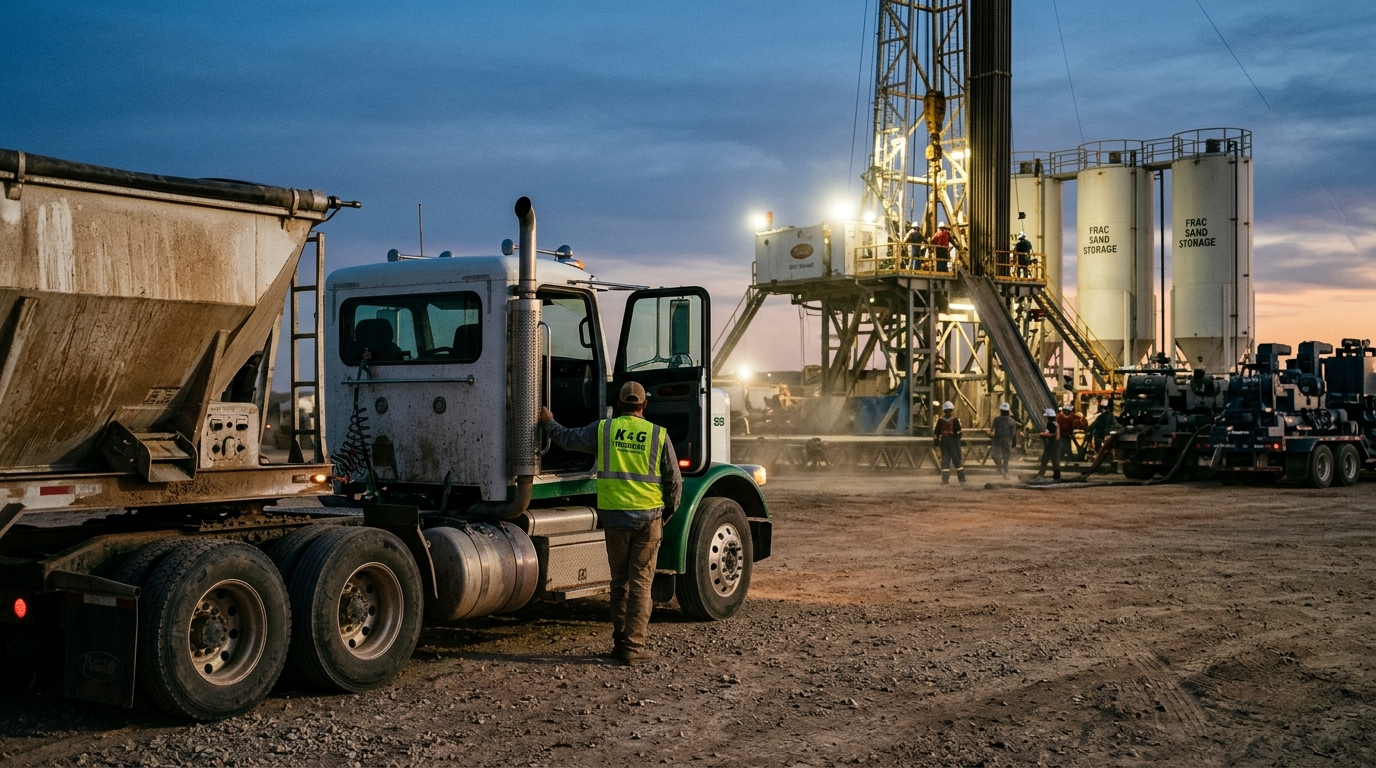
Oilfield truck driving looks nothing like a typical freight run down the interstate. Between the pre-dawn inspections, the hauls out to remote well pads, and the waiting around for space to unload, the job runs on its own rhythm. Anyone weighing a move into frac-sand hauling as an Owner-Operator deserves a clear picture of what an actual shift looks like before signing on. Sisu Energy, a Texas-based frac-sand hauling company, breaks down that daily cycle for oilfield drivers, and the pattern holds true across most operations in the state. The 12-14 Hour Shift Explained
A typical frac-sand hauling shift stretches 12 to 14 hours from start to finish. That window covers far more than time spent driving – it includes the inspection before the first load, the loading and unloading process itself, paperwork at each stop, and any waiting that happens along the way.
The length of the day isn’t arbitrary. It reflects how oilfield logistics actually work: sand has to move from a mine or transload facility to an active wellsite on a schedule that matches the pace of the frac crew working that site. A long shift packed with multiple loads is often the difference between a profitable week and a mediocre one for an Owner-Operator, which is exactly why understanding the full shape of the day matters before committing to the work.
Before Dawn: Pre-Trip Inspection
Most oilfield frac-sand days start before the sun comes up, and the first task has nothing to do with driving. A full pre-trip inspection of the truck and trailer comes first, every single day, without exception.
This isn’t a box-checking formality. Drivers look over brakes, tires, lights, couplings, and – for pneumatic trailers – the blower system and air lines that will matter later in the shift. A problem caught at 5 a.m. in the yard is a minor delay. The same problem discovered at a wellsite forty miles down a dirt road, with a frac crew waiting on sand, becomes a far bigger headache. Starting the day with a careful inspection sets the tone for everything that follows.
The Daily Cycle: Load, Haul, Unload, Wait
Once the inspection is done, the shift settles into a repeating pattern: load, haul, unload, wait, then do it again. A driver might pick up sand at a mine or transload point, haul it out to an active wellsite, go through the unloading process, and then wait for the next available load. That cycle can repeat several times across a single 12-to-14-hour shift, depending on haul distance and how busy the site is.
Each piece of that cycle brings its own tasks and its own potential for delay. Loading and unloading both take real time, not just driving between them, and federal hours-of-service rules count all of it against the clock.
Connecting Hoses and Running the Blower
Pneumatic frac-sand hauling adds a layer of hands-on work that hopper bottom hauling doesn’t require. Instead of simply dropping the load through gravity, drivers connect hoses between the trailer and the site’s storage system, then run the truck’s blower to push the sand through the lines. That process calls for monitoring tank levels and staying alert to prevent spills or overfills while the system is running.
It takes some getting used to, but it’s also one reason pneumatic work tends to pay more than hopper bottom hauling – the job demands more equipment, more training, and more attention at the unloading point.
Why Detention Waits Happen
Waiting is baked into oilfield hauling in a way that doesn’t show up in most other trucking segments. A wellsite can only unload sand as fast as the frac crew uses it, which means a truck that arrives ahead of schedule may simply have to wait its turn. These detention waits can stretch an otherwise efficient shift considerably, and they’re a normal part of the job rather than a sign that something has gone wrong.
Understanding why these waits happen helps set realistic expectations. The frac crew’s pace, site storage capacity, and the order trucks arrive in all play a role, and none of it is within a driver’s direct control.
From Smooth Highways to Rough Lease Roads
The driving itself changes character throughout the shift. A haul might start on a well-maintained state highway connecting two hubs, then transition onto rough, unpaved county or lease roads as the destination gets closer to the actual well pad. That shift calls for a different driving approach – slower speeds, more attention to the road surface, and awareness of other heavy trucks moving through the same tight space.
Road conditions near active drilling and completion sites can change with weather, traffic, and time of day. A route that was dry and firm in the morning might be rutted or muddy by afternoon, and narrow roads combined with heavy truck traffic around active well sites demand constant attention rather than autopilot driving.
Managing Multiple Loads Per Shift
Running several loads in one shift multiplies everything – more miles on the truck, more wear on tires and components, and more paperwork to track. Each additional load also means another round of the inspection, loading, hauling, unloading, and waiting cycle, which adds up quickly across a 12-to-14-hour day.
Drivers who plan their routes with road conditions, bridge limits, and weight restrictions in mind tend to move through multiple loads more smoothly than those who treat each haul as an isolated trip. Local knowledge of the lease roads in a given basin becomes a real asset once a driver has run the same lanes a few times.
How Hours of Service Shape Your Day
Federal hours-of-service rules set firm boundaries on how an oilfield shift can unfold. The 11-hour driving limit caps actual time behind the wheel, while the 14-hour on-duty window covers the full stretch from the start of the shift – including loading, unloading, paperwork, and waiting – not just the driving portion. Those two limits together determine how many loads a driver can realistically complete before running out of legal hours.
This is where the daily cycle and the regulatory clock intersect directly. A shift with long detention waits or slow loading at the mine eats into the 14-hour window just as much as time spent driving, which means a day with more waiting often means fewer completed loads, even if the driver never exceeds the 11-hour driving cap.
Why Oilfield Hauling Skips the Waiting-Time Exception
Some trucking segments qualify for a waiting-time exception that excludes certain delays from counting against on-duty hours. Oilfield frac-sand hauling generally does not get that break. The Federal Motor Carrier Safety Administration excludes drivers hauling supplies and materials such as sand to and from well sites from this exception, even when their trucks have loading or unloading modifications, and the drivers themselves have related training.
That distinction matters in practice. It means every minute spent waiting at a wellsite for storage space counts as on-duty time under the clock, reinforcing why those detention waits can shrink the number of loads completed in a shift.
Nights, Weekends, and Shifting Schedules
Oilfield work doesn’t run on a traditional Monday-through-Friday, daylight-hours schedule. Frac-sand hauling can include night shifts, weekend work, and up to six days of hauling per week, since active well completions don’t pause for a calendar. A driver’s schedule can shift from one week to the next depending on how busy a particular wellsite or basin becomes.
This unpredictability is part of the trade-off that comes with oilfield hauling’s earning potential. Drivers who go in expecting a flexible, sometimes irregular schedule tend to adjust better than those expecting a fixed routine, and planning personal time around completion activity rather than a set calendar becomes second nature after a few months on the job.
Why Shift Length Varies by Operation
Not every oilfield hauling day looks the same, even within the same basin. Shift length and the number of loads completed depend on the specific operation, the distance between the sand source and the wellsite, current road conditions, and how the hours-of-service clock lines up with the day’s tasks. A short-haul run near a mine might pack in more loads with less driving time, while a longer haul out to a remote pad might mean fewer loads but more miles.
This variation is exactly why experienced drivers pay close attention to which division or type of hauling they sign on with. Pneumatic hauling, hopper bottom hauling, and cement hauling each bring a different daily rhythm, and the carrier’s dispatch system plays a real role in how smoothly that rhythm plays out. Sisu Energy explains that live, 24/7 human dispatch can make it easier for drivers to get real-time updates when wait times stretch longer than expected, rather than guessing at what’s happening down the line.
For anyone weighing whether this daily grind fits their goals, getting familiar with frac sand hauling as a business model and career path is a solid first step before committing a truck and a schedule to it.
Sisu Energy
Info@sisuenergyllc.com
+1 817 717 1616
2400 Handley Ederville Rd
Ste 200
Fort Worth
TX
76118
United States


